How Modeling Supports Social-Emotional Learning
By Jessica Jordan, MS. OTR/L
There’s a quote I love and live by:
“Growing old is mandatory, but growing up is optional.” – Carroll Bryant 🤪
One of the best things you can do while playing with your child is modeling emotional regulation and foundational skills through play. Their brains are truly like sponges, and they watch everything we do.
The Power of Modeling Through Play
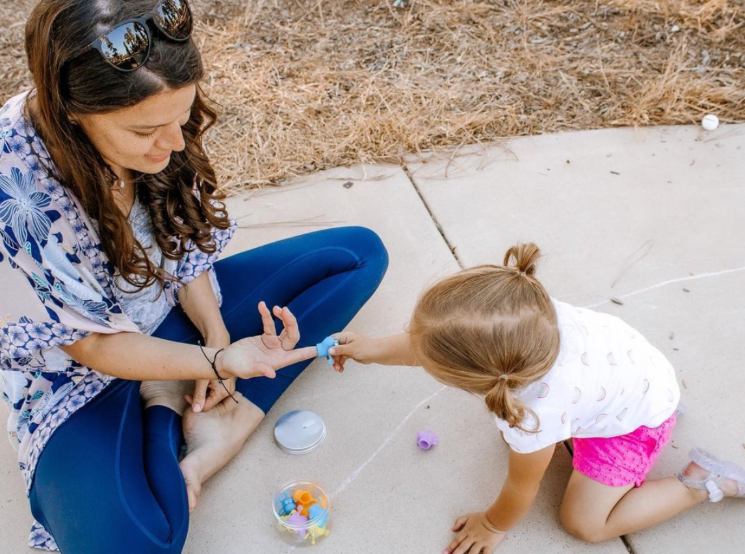
Engaging with toys and modeling calmness through deep breaths are simple ways to teach play skills and mindful regulation strategies. This little one was unsure of my “finger monsters,” so I began playing with them while she sat back and observed. By the end of our time together, she couldn’t get enough of these guys—utilizing them in numerous ways while developing a range of foundational skills, including visual-motor development, tactile processing, fine motor skills, imaginative play, sharing, and social interactions.
Try Deep-Breathing as a Co-Regulation Tool
While modeling during play is powerful, these same strategies can be applied to everyday routines. Even outside of playtime, your child is picking up on how you respond to stress, transitions, or dysregulation. One of the simplest tools you can model anytime, anywhere? Deep breaths.
This weekend, try modeling 1–2 big deep breaths while around your little ones. See if they imitate, if their shoulders drop, or their body shifts into a more relaxed state—all from you modeling a calm body. 😮💨
Let me know what happens (even if you've modeled and noticed no difference, there’s no harm in modeling a self-care skill like deep breaths😉).
Helpful Links
Was this post helpful or did it spark your curiosity? If you’re looking for deeper support, we’ve created a course and curated resources to help families, caregivers, and professionals better understand the motor and regulation challenges many nonspeaking and apraxic autistic individuals experience.
Online Course for Parents, Caregivers & Professionals:
Foundations in Apraxic Autism — an online course exploring the often-missed motor side of autism. Learn how motor planning, nervous system regulation, and the brain-body connection impact communication and daily life, along with practical ways to support the autistic individual in your life.
Explore Our Resource & Service Hub:
Explore our most trusted resources and favorite tools, or discover ongoing support options for families and professionals navigating autism, apraxia, and motor planning differences.
You might also like…