Core Strength & Fine Motor Skills: Why the Trunk Comes First
By Jessica Jordan, MS. OTR/L
Why Core Strength Comes First
As an occupational therapist, I often look at foundational strength before jumping straight to hand function. Like most things in life, a strong foundation is essential to build upon. Our foundation in the human body is our core, the trunk muscles in both the front and back of the body.
Proximal strength (musculature closer to the center of the body) helps lay the groundwork for distal strength (musculature further away, like in the hands and fingers). So in many cases, it would be very hard to develop hand strength if an individual has a weak core or shoulders. This applies to both mobility and stability, supporting the common OT phrase: “proximal stability before distal mobility.”
How OTs Identify Core-Related Weakness
So how might an occupational therapist explore this? Through clinical observations and informal testing, an OT might notice an individual slouching or needing extra support to sit upright in a chair. This could suggest proximal weakness, which would then lead us to examine distal strength, specifically, intrinsic hand strength. I see this pattern often with many students in the school-based setting, which is why it’s so important to develop core and upper extremity strength when targeting fine motor skills.
Real Life Activities That Build Core and Fine Motor Skills
Let’s explore a few ways you might see an occupational therapist address this.
Playground Bars for Grip and Trunk Activation
The monkey bars, along with other playground activities, are a favorite for my kids and help strengthen the core and upper extremities, particularly grip strength. Grip strength is crucial for developing functional grasp patterns needed for long term writing success and many activities of daily living, such as brushing teeth and holding a spoon or fork.
These activities also provide rich proprioceptive input to the hands, arms, and shoulders, supporting body awareness and adding to the overall benefit of play.
Paddleboarding for Full Body Coordination
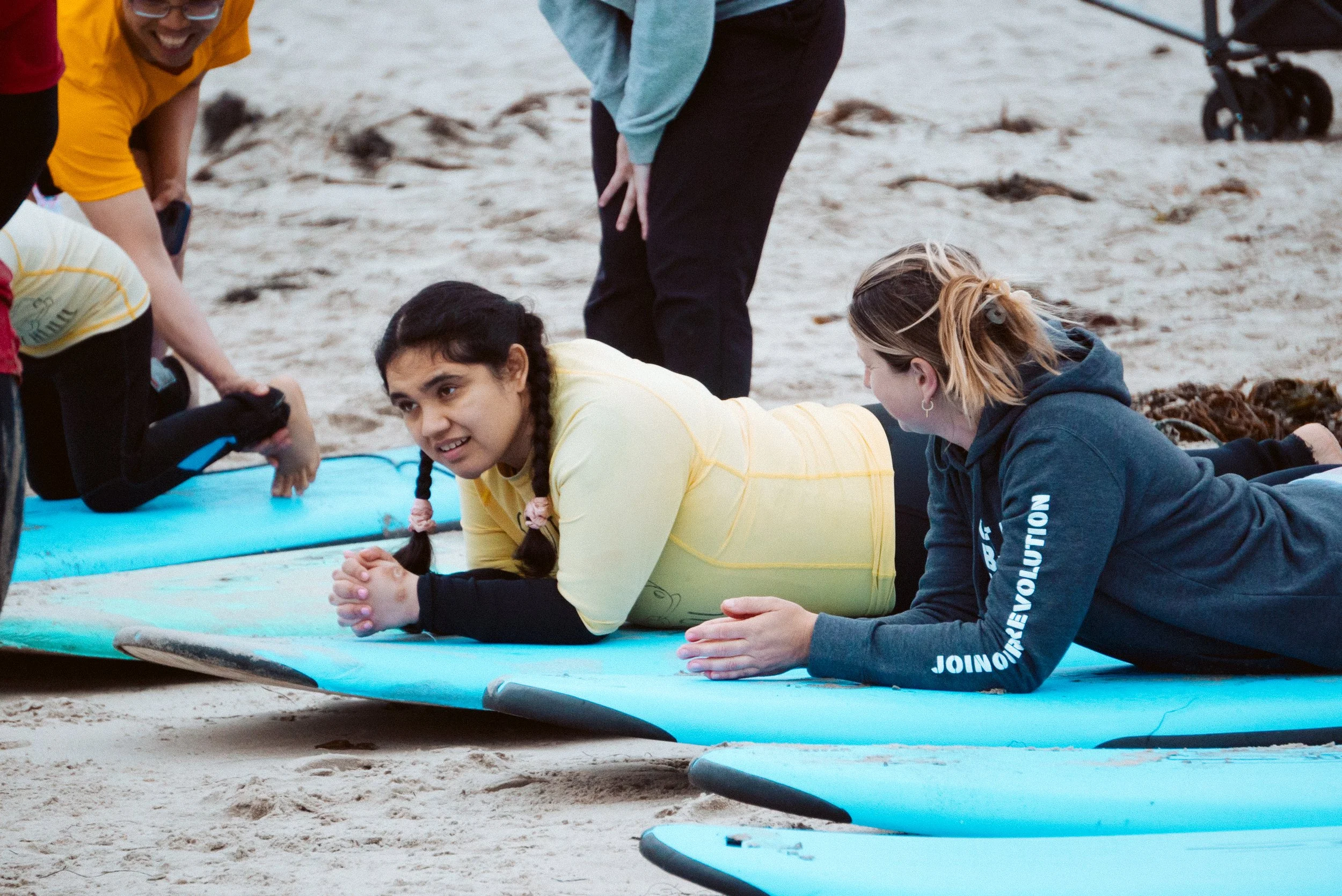
Another favorite activity among many of our clients (adults and children) is paddleboarding. This activity also demands strong proximal control before distal movement. A grounded, activated core is essential for balance, so an individual can paddle and grip the oar effectively. (Not to mention the incredible sensory input from the movement and water!)
Bringing It Back to the Foundation
Together, these activities highlight why core strength is such an important starting point. When the body has a stable, supported base, movement becomes more efficient and purposeful. Strength and coordination in the hands don’t develop in isolation. They are built on the ability to stabilize, balance, and organize the body as a whole.
By addressing proximal strength through meaningful, real-life activities, we support skills that carry over far beyond a single task. This foundation allows children and adults to move with more confidence, control, and ease in their everyday lives.
Helpful Links
Was this post helpful or did it spark your curiosity? If you’re looking for deeper support, we’ve created a course and curated resources to help families, caregivers, and professionals better understand the motor and regulation challenges many nonspeaking and apraxic autistic individuals experience.
Online Course for Parents, Caregivers & Professionals:
Foundations in Apraxic Autism — an online course exploring the often-missed motor side of autism. Learn how motor planning, nervous system regulation, and the brain-body connection impact communication and daily life, along with practical ways to support the autistic individual in your life.
Explore Our Resource & Service Hub:
Explore our most trusted resources and favorite tools, or discover ongoing support options for families and professionals navigating autism, apraxia, and motor planning differences.
You might also like…