

In-person support | Southern California
Community Integration & Adaptive Support
We provide services in the natural environments where life happens—at the grocery store, the coffee shop, on a neighborhood walk, at work, or anywhere meaningful routines take place. Rather than practicing skills only in a clinic, we support movement where individuals naturally learn, participate, and engage with their communities.
Using an apraxia-informed, community-centered approach, we focus on motor planning (praxis), functional movement, intentional motor control, regulation, and practical strategies that make everyday activities more accessible. We recognize that motor planning, social participation, leisure, adaptive functioning, and community integration are best understood—and most effectively supported—in the environments where they are actually used.
Motor planning, regulation, and communication demands naturally increase in community settings, where environments are less predictable, and activities require individuals to initiate, sequence, adapt, and sustain movement in real time. Providing support in these moments allows us to coach movement as it happens, address barriers as they arise, and develop strategies that translate directly to everyday life. Community-based services also allow us to observe how motor planning, functional movement, regulation, communication, and sensory processing interact during meaningful everyday activities, providing a more complete understanding of each individual's strengths and support needs.
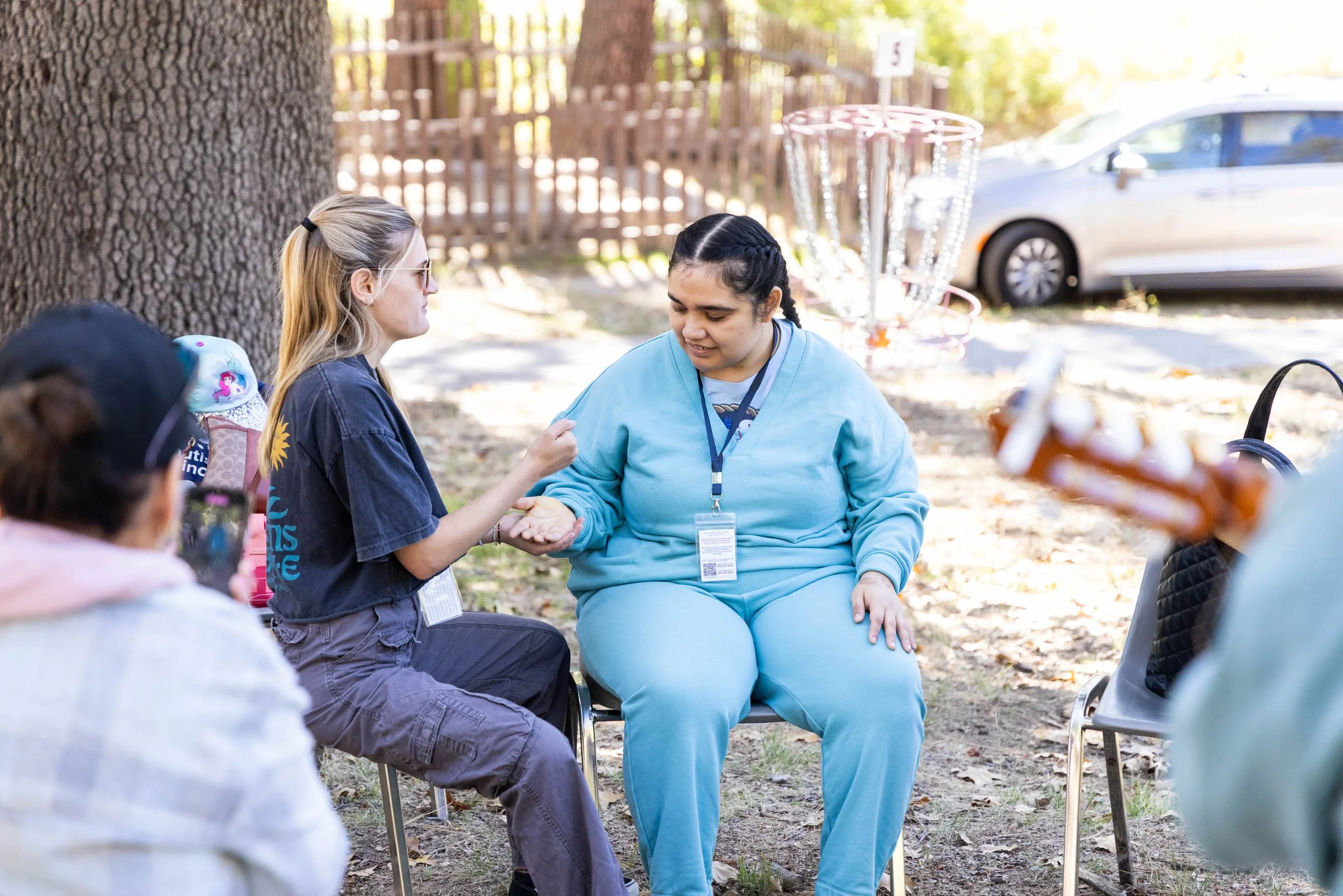
When support is provided in natural contexts, skills are more likely to carry over into everyday life. Person-centered activities foster greater engagement, confidence, autonomy, and meaningful participation while helping individuals build the skills needed to navigate their communities with greater independence and a stronger sense of belonging.
Many autistic individuals and individuals with whole-body apraxia are limited not by a lack of understanding or motivation, but by differences in motor planning and intentional movement. When these motor differences are misunderstood, people are often underestimated and excluded from opportunities to communicate, build relationships, work, learn, and participate fully in their communities.
Our apraxia-informed approach recognizes the connection between motor planning, regulation, and participation. Rather than assuming someone "can't," we identify the motor barriers affecting everyday life and provide individualized support to help make communication, daily routines, social participation, leisure, and vocational activities more accessible.
Our goal is to help individuals build the motor foundations that support greater autonomy, self-determination, confidence, and meaningful participation in the activities and communities that matter most to them.

“Every autistic and apraxic individual deserves support that makes daily life feel more accessible, connected, and fulfilling.”
An Integrative, Movement-Centered Approach
Daily life calls for rapid sensory processing, flexible motor sequencing, social interpretation, and navigation of unpredictable environments. These demands cannot be fully replicated in clinic-based sessions. At Sunrise Therapies, we provide a unique and highly individualized approach grounded in movement science, whole-body apraxia understanding, environment-based practice, and functional life skills.
Our work centers on areas essential to daily living, including:
Community navigation and community integration
Environmental sensory processing and resilience
Motor planning, initiation, sequencing, and intentional movement
Communication supported through motor organization
Instrumental activities of daily living (IADLs)
Recreation and leisure participation
Social participation and relationship building
Vocational readiness and workplace participation
Support is shaped by the individual’s strengths, interests, nervous system capacity, and long-term goals — building not only motor skills, but fostering a sense of belonging, agency, and identity through meaningful participation.

What Sets Us Apart
What makes this service truly distinctive is the combination of apraxia-informed movement support and community-based practice. These two elements are rarely offered together, yet when integrated, they create a bridge between learning a skill and using it meaningfully. We support intentional motor initiation, improved sequencing and follow-through, and more reliable access to movement for communication and self-expression. When the nervous system feels supported and safe, participation becomes more successful — and life opportunities expand.

Why Community Integration is so Beneficial to Apraxic Individuals
Development of motor planning and intentional motor control cannot be fully understood without considering the environment in which movement is required. Real-world settings introduce variables that influence performance: sensory input, unexpected stimuli, social demands, navigation requirements, and shifting motor plans. When these elements are only addressed in controlled spaces, skill transfer is limited.
Community-based work allows us to:
Observe motor patterns under authentic sensory conditions
Support movement initiation during real tasks and transitions
Cultivate communication through real time interactions
Build adaptive strategies that transfer across settings
Strengthen regulation capacity in varied sensory environments
Monitor skill carryover across everyday routines
Support the nervous system without removing real-life context
By practicing within the environments where participation is expected, we reduce the gap between ability and functional access, leading to more consistent engagement across settings.

We are currently operating on a waitlist for our in-person services in the San Diego area. Join our waitlist, and we'll let you know when one of our local therapists has an opening.
But There’s Good News… You Don’t Have to Wait to Get Started!

We are currently operating from a waitlist for our in-person services. But that doesn't mean you have to wait to begin learning, finding support, and moving forward.
When you begin to understand whole-body apraxia, it can feel like you've finally discovered a missing piece. Suddenly, there may be new questions, new possibilities, and a renewed sense of hope about what could be possible. And when that happens, you may want to learn everything you can and start finding ways to support your loved one right away.
That’s why we created our Foundations Course & Sunrise Membership.
Foundations Online Course -helps parents, caregivers, therapists, and support teams understand the foundational concepts behind whole-body apraxia and begin viewing communication and behavior through a motor-based lens.
Monthly Membership – gives you a full library of resources to explore, intentional motor exercises to try, and opportunities for more personalized support as you continue learning and supporting your loved one.